Mayfield Park Southampton History
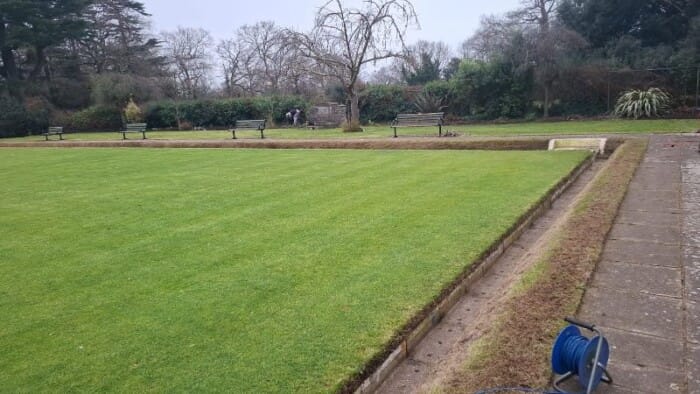
Mayfield Park is a beautiful 17-hectare public green space in the southeast of Southampton (Woolston/Weston area), managed by Southampton City Council. It features formal gardens, woodland walks, playing fields, a stream valley, a children’s play area, and the historic Mayfield Park bowls green. The park has earned a prestigious Green Flag Award for its quality and is open year-round.
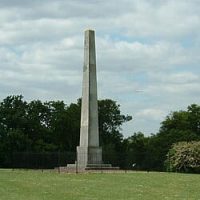
The 30 acres of land that became Mayfield estate was purchased in 1854 by a Mr Robert Wright from the Chamberlayne family and came to occupy an area which covered both the present ornamental gardens and the adjacent playing field. Sited near the playing fields is the Obelisk, commemorating Charles Fox the radical politician which serves as a local landmark.
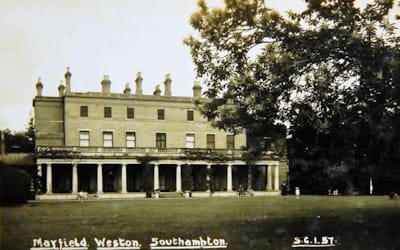
Upon the site of our present bowling pavilion, he built a large mansion named Mayfield, which was completed in 1856. Unfortunately, Robert died in the following year but his family were to remain in residence until 1889, when the house and the estate was sold to Baron Granville Augustus Waldegrave, the 3rd Lord Radstock.
He had been a socialite and was a high-ranking military officer when following recovery from a fever during the course of the Crimea war, his thoughts turned towards Christianity. Upon his return to the country, he embarked on a religious career as a consequent became particularly well-known for his preaching of the Gospel at home and abroad, where he was to make several royal connections. It was during this period that Mayfield became the centre for this activity.
Succeeded by his son Granville George Waldegrave in 1913. The work continued and aided by his sister, Constance, preached and held Sunday school meetings within the house. Granville never married, and although succeeded by his brother Montague in 1937, the estate was never inherited.
Instead, it was sold to the local builders Hinton, but this act was challenged when it was discovered that Lord Radstock’s “will” included a covenant to keep the land as open space for public use. After his death, the estate was sold to Southampton City Council for £23,000. After some modifications the grounds were opened to the public in June 1938.
During World War 2, the house was used to billet French soldiers and later those civilians who had been made homeless through the conflict.
Mayfield House fell into disrepair, the building suffered from ravages of neglect. Despite many suggestions for its future use, it became increasingly evident, there, there was little alternative other than for it to be demolished, which occurred in 1956, 100 years after its construction.
Some remnants still survive; the Grade II-listed stable block (with clock tower) on Wright’s Hill, the lodge house on Weston Lane (c.1860), and gate piers. A fountain in grounds of the bowling club commemorates Alderman Walter Alford, who helped secure its public status.
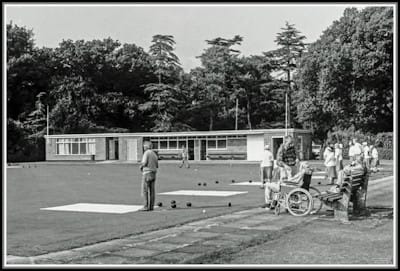
With a growing need for a public bowling facility, a number of local residents, including members, of the Brouard and Darlington families, persuaded the council to construct a Bowling Green on the vacated site in preference to the alternative veracity ground location and the green was subsequently opened on Saturday, the 30th of April. 1960.
The original bowling pavilion. Was destroyed by arson in October 2000 but through the provision of a city council partnership agreement, the premises were rebuilt in its present form to the club’s specification. These new premises were opened on Saturday 21st June 2003 by Southampton Football Club (“Saints”) legend, Matthew Le Tissier and councillor Derek Burke head of leisure services division.
Mayfield Park Bowling Club and Southampton City Council continued this partnership arrangement until the Spring of 2024, when the club undertook responsibility for running the club and maintain the bowling green and it’s grounds.